15
The Tao·The Flow of Universe
类型
Art Direction
Art Direction
年份
2025
2025
简介
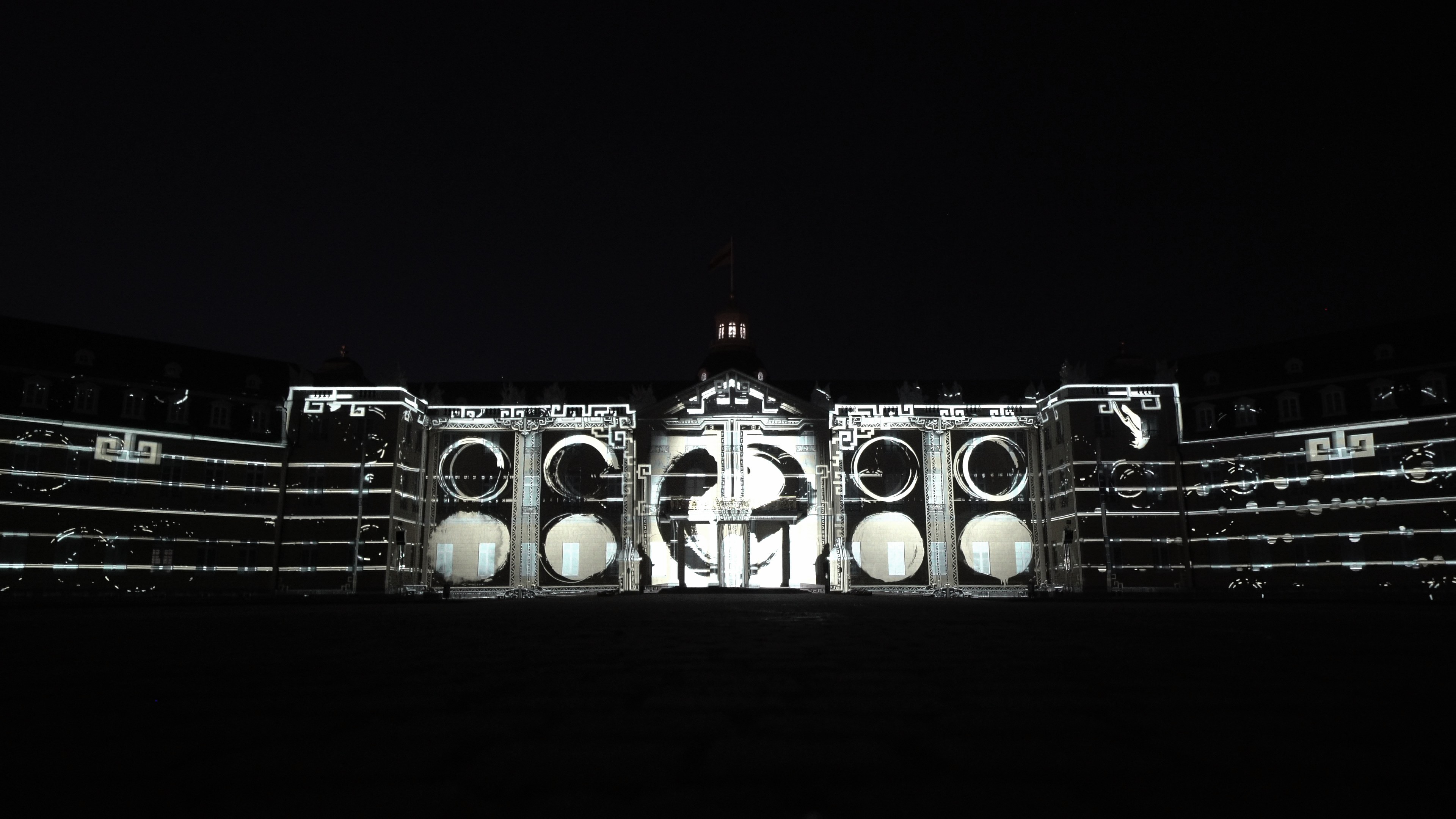
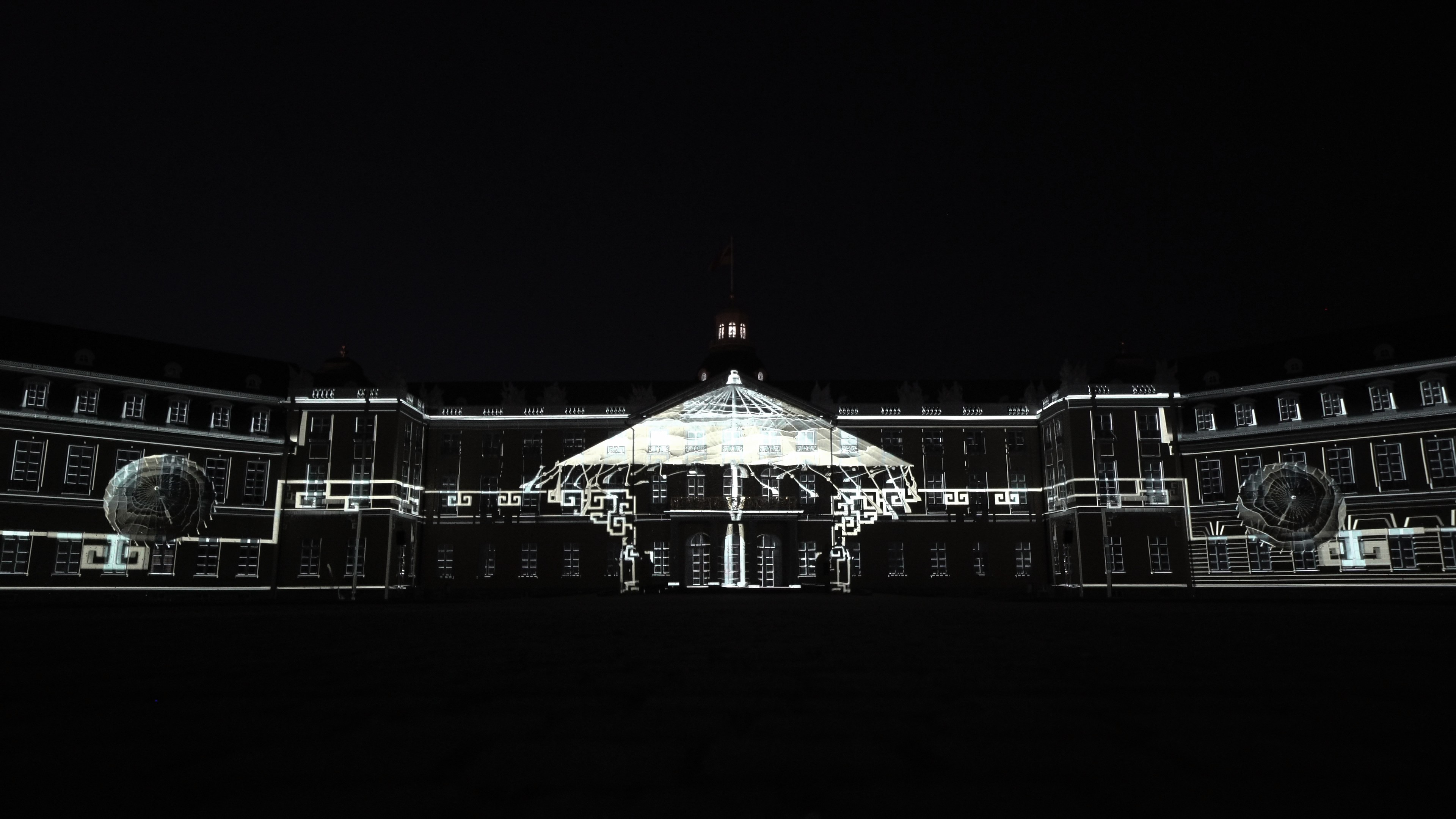
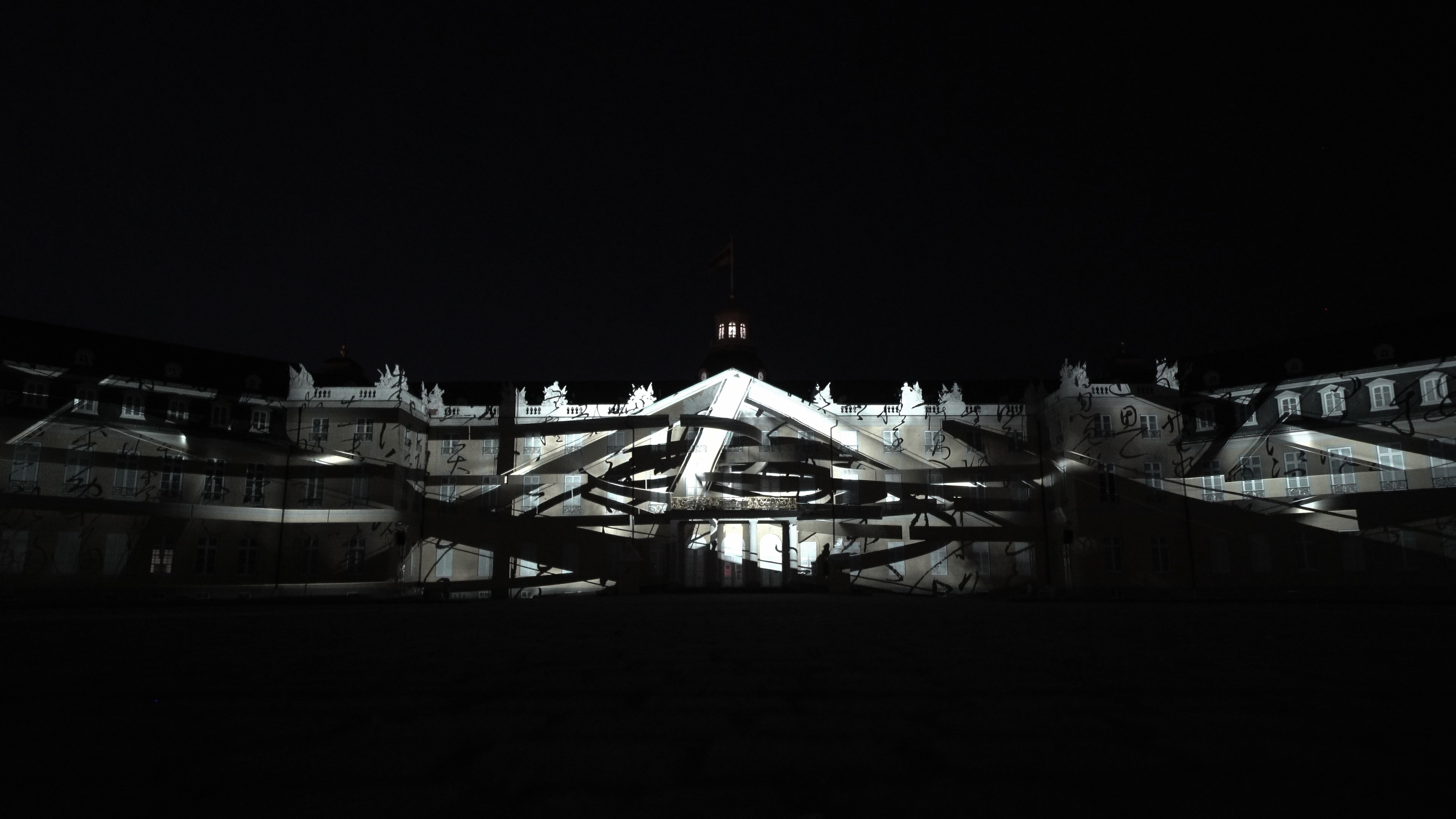
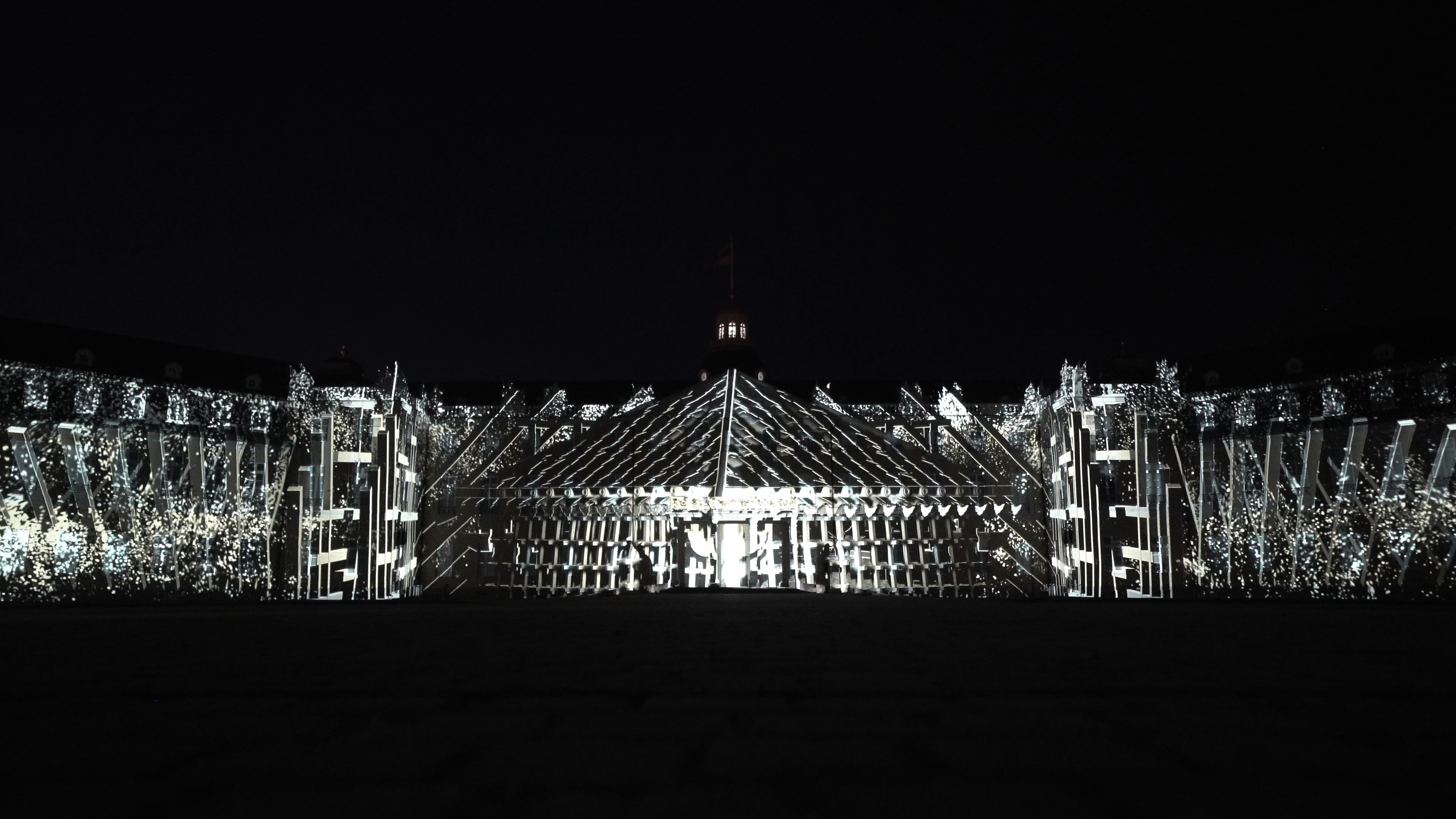
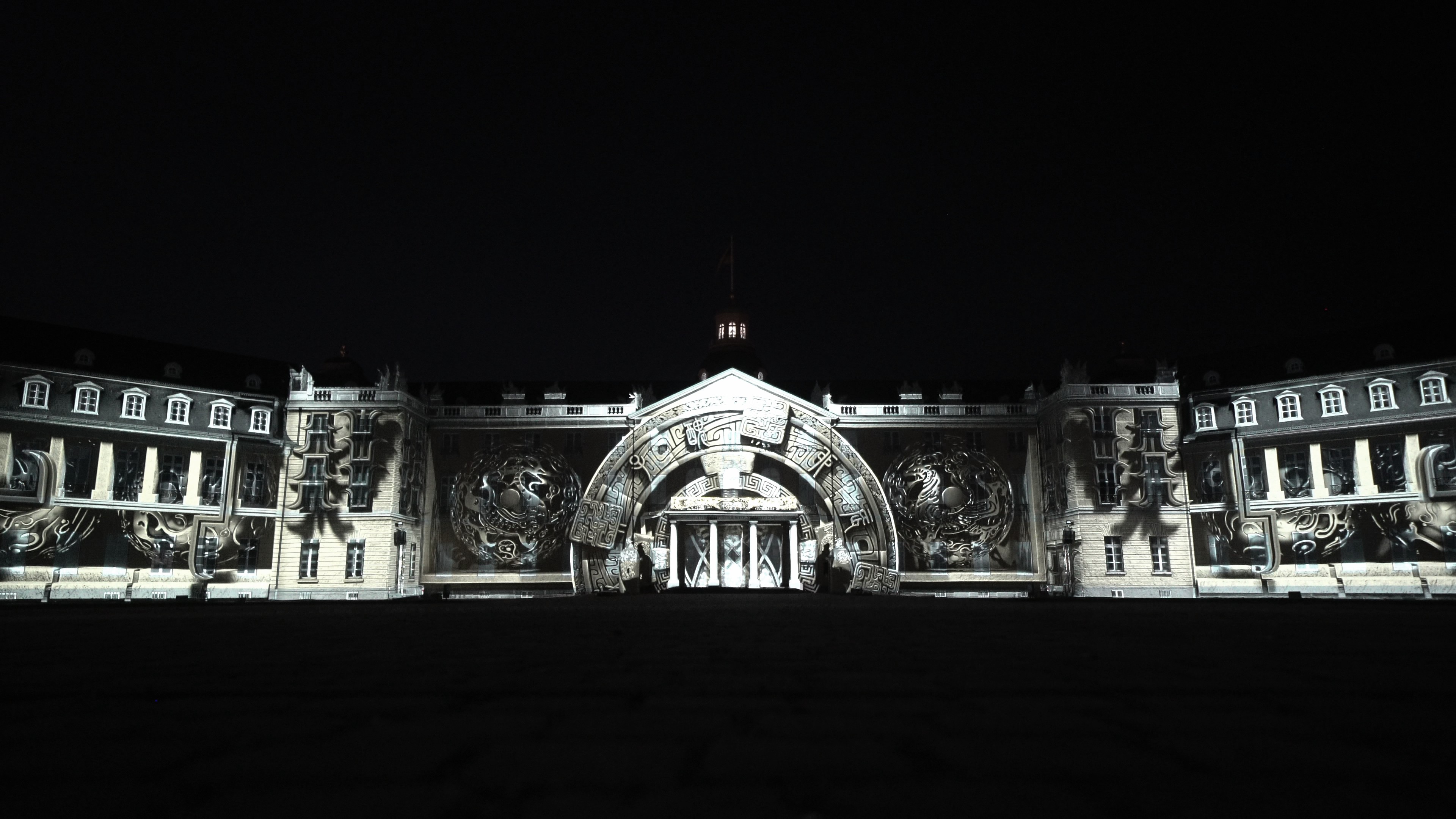
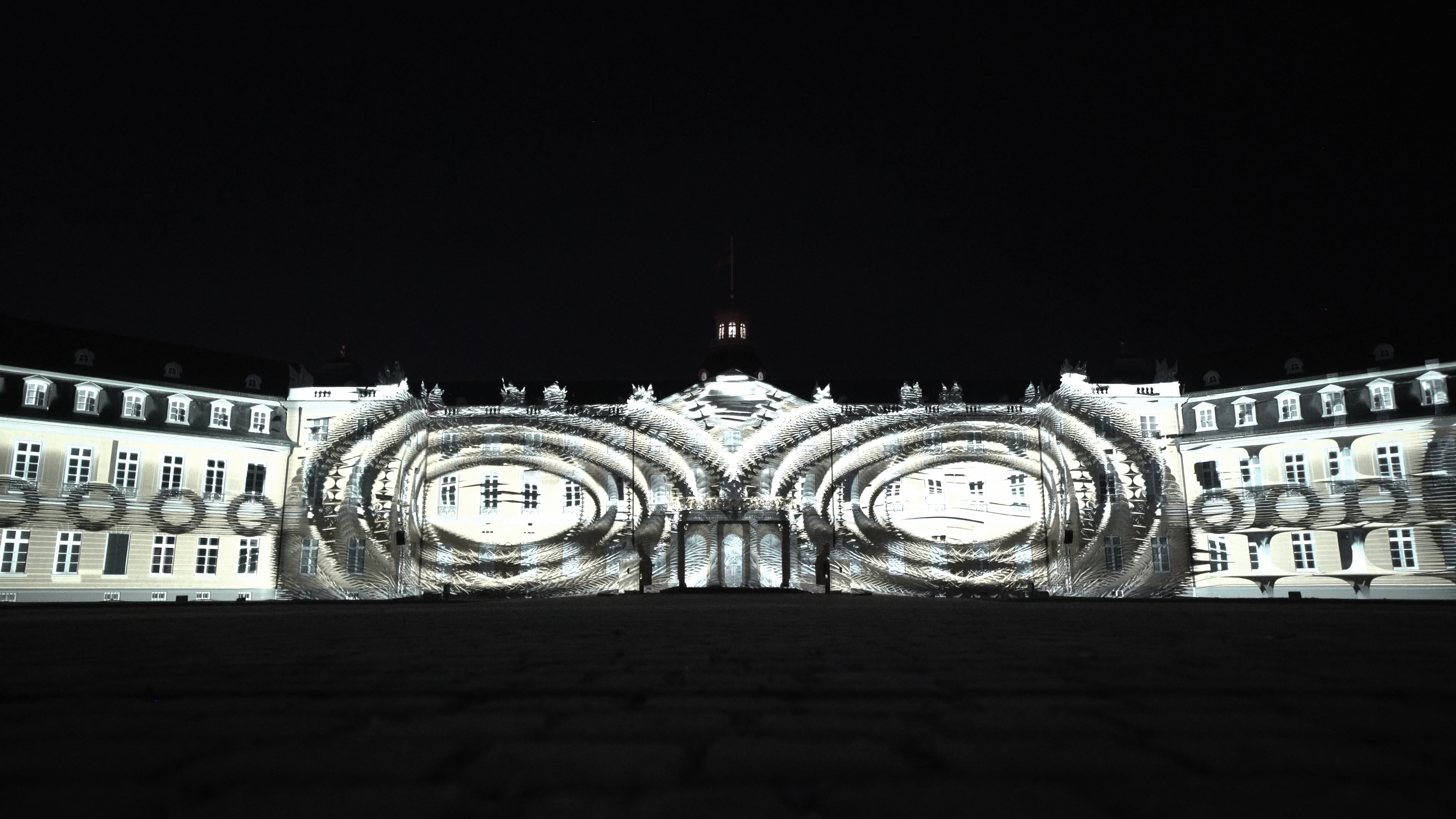
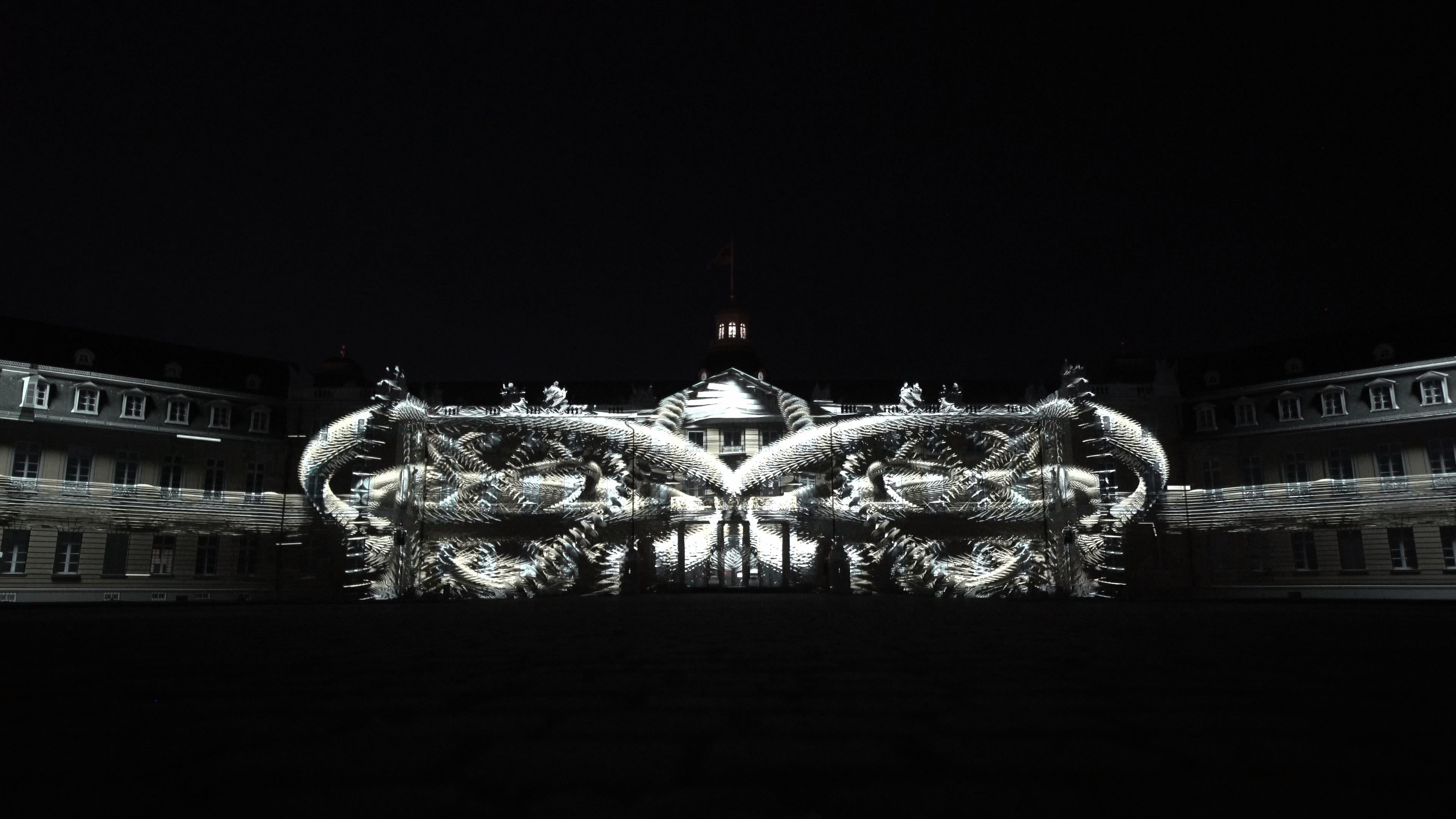
This artwork was exhibited in 2025 at the Schlosslichtspiele in Karlsruhe, Germany, organized by ZKM, under the title The Tao · The Flow of Universe. Rooted in the visual foundation of ink painting, it merges the Tao from Eastern philosophy with the rational logic of Western modern science, seeking to establish a new form of visual narrative. The blankness and fluidity of ink are used as metaphors for cosmic operation and scientific evolution, unfolding imagery of time, energy, and the cycle of life.The design employs large amounts of abstract particle structures, vortex lines, and waveforms, symbolizing scientific concepts such as the quantum world, gravitational waves, and energy fields. Black and gold collisions, folded arcs, and rotating totems in the visuals respond to modern physics` exploration of the structure of the universe. These images are not mechanical reproductions of real scientific devices but a perception of their existence and logic through the sensibility of Eastern ink painting, interpreting rigid knowledge with flexible brushstrokes.The structure of the artwork follows the principles of symmetry, disruption, and recomposition, echoing the cyclical system of Tao Follows Nature. In the architectural mapping, patterns of circuit boards, the form of Taiji, and celestial trajectories are revealed and resonate with the silhouette of Karlsruhe Palace, blending traditional space with a technological context.In visual language, the artwork draws inspiration from the essence of masters Qi Baishi and Wu Guanzhong, while also referencing the abstract systems of Kandinsky and Mondrian. At the same time, it preserves the brush logic of Eastern calligraphy, water textures, and drifting clouds, allowing the coldness of technology and the poetry of the East to mirror each other within the same frame. Through this artwork, we aim to bridge ink painting and technology, Eastern philosophy and Western science, transforming architecture into a cross-cultural and cross-temporal visual laboratory.